
Cotopaxi Day Trip from Quito: Everything You Need to Know
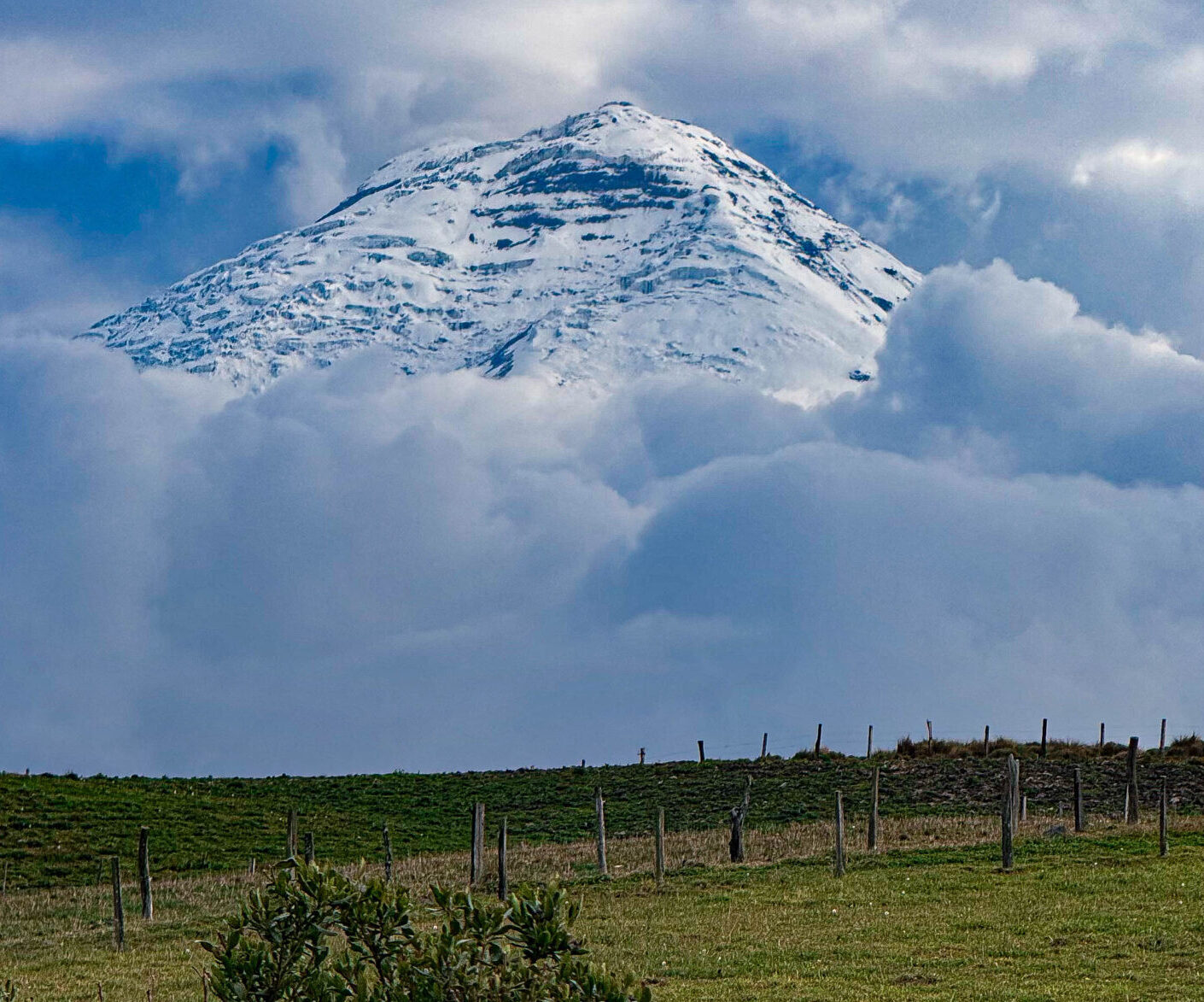
Cotopaxi is one of those volcanoes that stops you in your tracks the moment it appears through the clouds. Rising to 5,897 meters above sea level with a near-perfect snow-capped cone, this iconic Andean giant is Ecuador’s most photographed natural landmark — and at just 50 kilometers south of Quito, it’s also one of the most accessible high-altitude experiences in South America.
A Cotopaxi day tour from Quito combines dramatic Andean scenery, páramo wildlife, an optional hike to the glacier base refuge, and landscape photography opportunities that define the Ecuador travel experience. For travelers exploring more of the country, our complete collection of day tours from Quito covers destinations across the Andes, cloud forest, and Amazon — and for those building a multi-day Andean itinerary, our tailor-made Ecuador tours can incorporate Cotopaxi into a custom route with Quilotoa, Otavalo, or the Amazon.
Here’s everything you need to know before visiting Cotopaxi.
Where Is Cotopaxi National Park?
Cotopaxi National Park is located approximately 50 kilometers south of Quito in the province of Cotopaxi, easily reached via the Panamericana Sur highway. The drive from the capital takes 1.5 to 2 hours by private vehicle.
Key figures:
- Park area: 33,393 hectares of protected Andean ecosystem
- Altitude range: 3,400 to 5,897 meters above sea level
- Main habitats: Páramo grassland, polylepis forest, high-altitude wetlands, glacier zones
- Established: 1975
The volcano sits within Ecuador’s legendary “Avenue of the Volcanoes” a corridor of Andean peaks stretching from Quito to Riobamba, first named by German naturalist Alexander von Humboldt during his 1802 expedition to the region.
The Cotopaxi Volcano: What to Know
Cotopaxi is one of the world’s highest continuously active volcanoes, with significant historical eruptions in 1742, 1768, 1877, and most recently in 2015, when ash and lava flows closed the park for several months. Today, the volcano is monitored daily by Ecuador’s Instituto Geofísico, and the park operates normally under current protocols.
Trails below 5,000 meters remain fully open, while the upper glacier and summit are restricted to accredited mountaineering expeditions.
On clear days — most common during morning hours before cloud cover builds — the glacier summit creates one of the most striking landscape photographs available anywhere in Ecuador.
Hike to the José Rivas Refuge
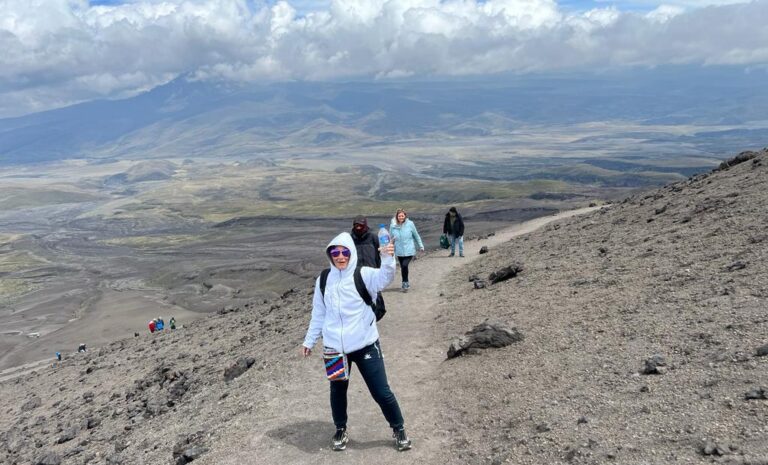
The José Rivas Refuge hike is the centerpiece activity of any Cotopaxi day trip. It’s not technically demanding in terms of distance, but the altitude transforms it into a genuine physical challenge.
From the refuge, views extend across the páramo to neighboring volcanoes including Sincholagua, Rumiñahui, and — on exceptional days — Chimborazo and Tungurahua in the distance.
Altitude advisory: The parking area and refuge sit above 4,600 meters, where available oxygen is roughly 40% less than at sea level. Spending at least 2–3 nights in Quito (2,850 m) before visiting Cotopaxi dramatically reduces the risk of symptoms. Go slowly, breathe steadily, and descend if discomfort increases.
Limpiopungo Lagoon
Limpiopungo Lagoon sits at approximately 3,800 meters altitude and offers a completely different — and considerably more accessible — experience within the park. A 3-kilometer walking circuit around the lake shores is suitable for all ages and fitness levels.
On calm mornings, the snow-capped volcano reflects perfectly in the still water, creating photographic compositions that require no filters or editing.
Wildlife commonly seen at Limpiopungo:
- Andean coots and speckled teals on the water
- Curiquingue (carunculated caracara) — Ecuador’s national bird, regularly spotted perched on volcanic boulders
- Andean fox — frequently visible at dawn and dusk near the lake edges
- Wild horses — free-roaming descendants of introduced livestock
- Bar-winged cinclodes, páramo pipit, and other high-altitude specialists for birdwatchers
The circuit takes approximately 1 to 1.5 hours at a relaxed pace and is ideal as a complement to the refuge hike.
Wildlife in Cotopaxi National Park
Despite the extreme conditions above 3,500 meters, the park supports remarkable biodiversity:
- Andean condor — the park is part of an active condor conservation program; birds are occasionally spotted soaring above the volcano rim
- White-tailed deer (venado de cola blanca) — common near the lower park entrances, especially at dawn
- Cotopaxi rabbit — endemic to Andean elevations, frequently seen in the páramo grasses
- Andean fox — the most commonly observed large predator in the park
- Great horned owl — nocturnal, occasionally seen near the lagoon at first light
For birdwatchers, target species include Andean condor, giant hummingbird, tawny antpitta, bar-winged cinclodes, and noble snipe across different elevation bands.
Best Time to Visit Cotopaxi
Dry season (June–September): Clearest skies and best summit visibility. Mornings are typically clear; afternoons bring wind and cold. This is peak season for photography and hiking.
Wet season (October–May): More frequent cloud cover can obscure the summit, but dramatic weather and fewer visitors. January and February occasionally produce the clearest days of the wet season. The park receives fewer visitors outside peak months.
Morning visits always outperform afternoon ones — regardless of season, Cotopaxi is clearest before noon.
What to Pack
Because of the high altitude and rapidly changing Andean weather, packing correctly is non-negotiable:
- ✅ Wind-proof, warm jacket (it can feel sub-zero even in July)
- ✅ Thermal base layer
- ✅ Gloves and wool or fleece hat
- ✅ Waterproof hiking boots (the trail to the refuge is loose gravel)
- ✅ High-SPF sunscreen and UV sunglasses (UV radiation intensifies significantly at altitude)
- ✅ Minimum 1.5 liters of water
- ✅ Snacks (energy bars, chocolate, nuts)
- ✅ Camera with extra battery (cold drains batteries faster)
- ✅ Altitude sickness tablets (soroche pills) — widely available at Quito pharmacies
Altitude Safety
The Cotopaxi parking area and hiking trail sit above 4,600 meters — among the highest elevations accessible by road on any standard day trip from any major South American city. At this altitude, oxygen availability is approximately 40% less than at sea level.
If you’ve just arrived in Ecuador and haven’t acclimatized, the hike to the refuge can trigger symptoms of altitude sickness — headache, nausea, dizziness, and shortness of breath. Spending 2–3 nights in Quito (2,850 m) before visiting significantly reduces this risk. Symptoms typically resolve within 30–60 minutes of descending.
For broader Ecuador travel planning that incorporates altitude management and itinerary design across multiple regions, Ecuador Travel (Ecuador’s official tourism portal) offers useful regional guides and destination information.
Book Your Cotopaxi Day Tour
A day trip to Cotopaxi delivers everything the Ecuadorian Andes promises — dramatic volcanic scenery, clean páramo air, close encounters with Andean wildlife, and the extraordinary experience of standing at nearly 5,000 meters beside one of South America’s most iconic volcanoes.
Book your guided Cotopaxi day tour from Quito with Equator Expeditions and discover why Cotopaxi is one of Ecuador’s most unforgettable natural destinations.
